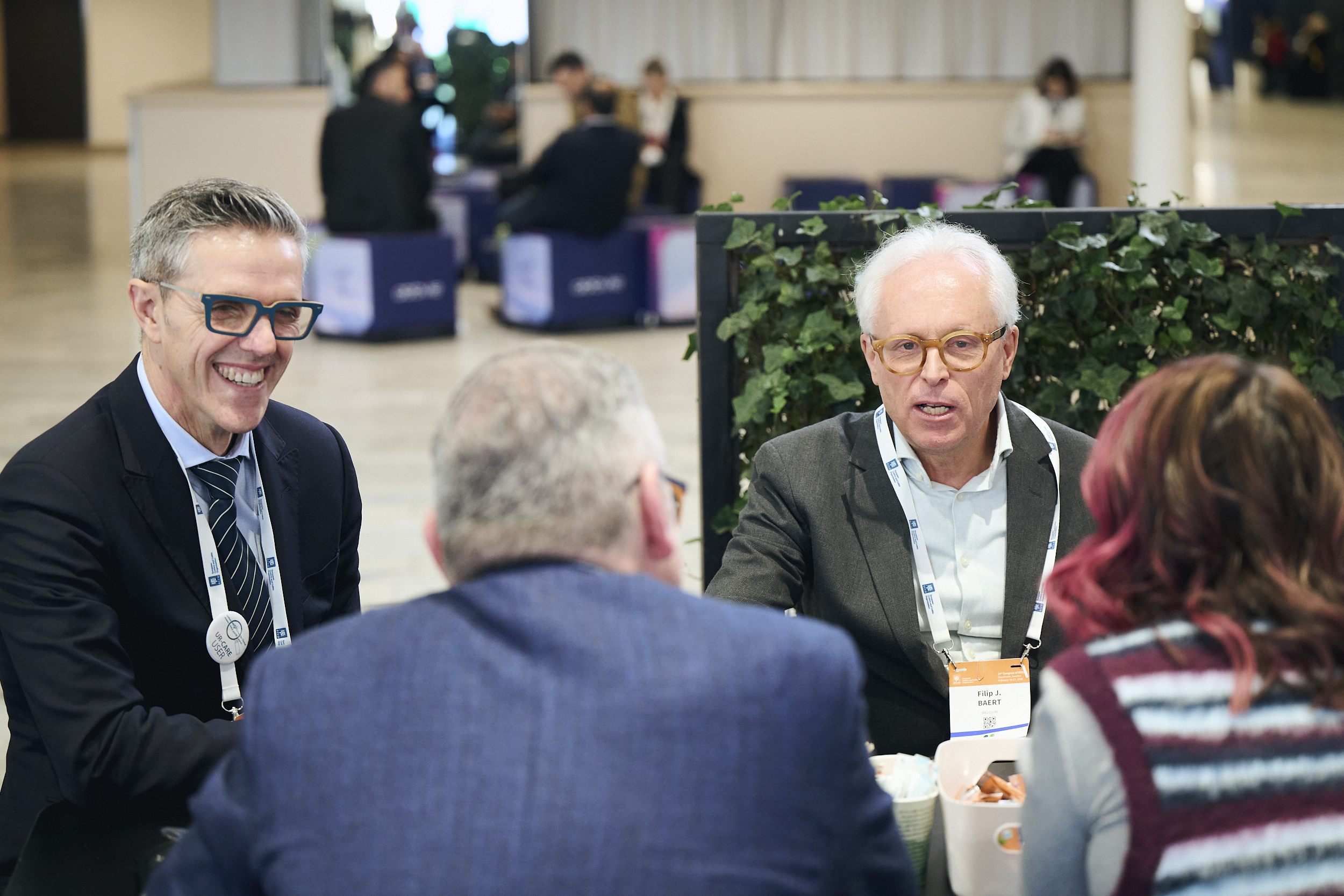
Interview with Filip Baert, IBDiM Managing Director


Driving Global Collaboration: A Landmark Milestone for the UR-CARE Platform
The UR-CARE database has officially achieved an extraordinary milestone, registering over 100 dedicated centres and tracking data for more than 52,000 IBD patients worldwide. Managed by IBDIM GmbH (the research organisation of ECCO), this IBD-specific, GDPR-compliant registry is fundamentally changing how clinicians collect, secure and leverage patient data. In this exclusive interview for ECCO News, we sit down with clinical trialist and IBD expert Filip Baert to discuss the vision behind UR-CARE, how it easily outperforms generic data platforms and the upcoming shift toward landmark global collaborative studies.
Dear Filip, what is your current professional situation?
I am currently employed as an IBD clinical gastroenterologist and clinical trialist at the AZ Delta Hospital in Roeselare, Belgium.
What have been your roles in ECCO so far? And, for how long have you been involved in UR-CARE?
I initially entered ECCO by becoming a member of ClinCom. Later, I became the chair of ClinCom and subsequently served as the Scientific Officer on the ECCO Governing Board.
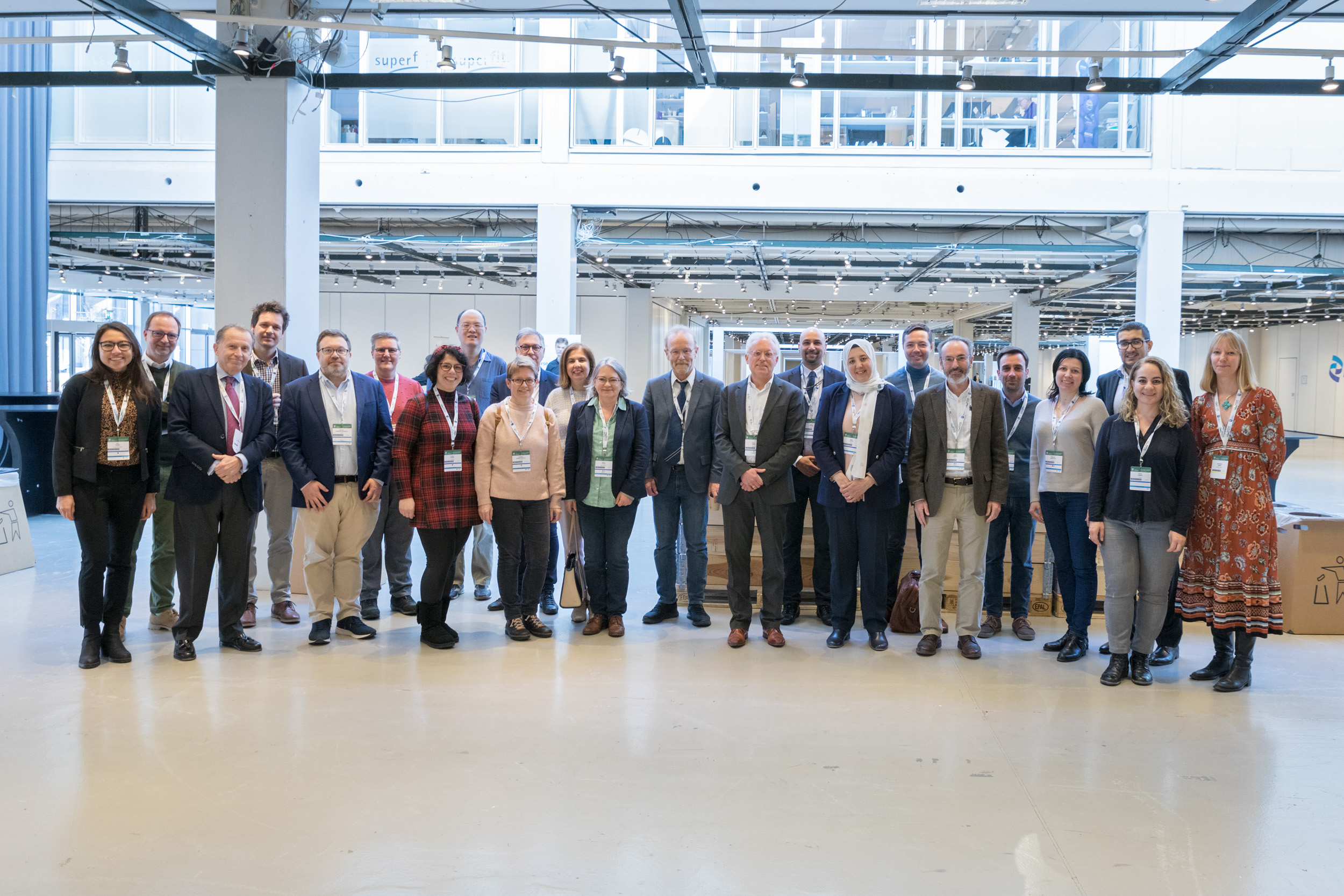
After that, I became involved in the setup and development of the UR-CARE database. This was a collaborative effort with my colleagues: Britta Siegmund from Berlin (Germany), Javier Gisbert from Madrid (Spain) and Ebbe Langholz from Copenhagen (Denmark). Our collaboration has been outstanding. This project truly required a long-term vision and was anticipated well ahead of its time.
UR-CARE has reached a significant milestone with more than 100 centres registered and more than 52,000 patients entered. What does this represent for you?
UR-CARE has indeed reached a major milestone with more than one hundred registered centres and over fifty thousand patients entered. This is an achievement in which many ECCO Members have participated, and the success of these efforts is thanks to the many physicians throughout the world who use the database. I view this milestone as a long-anticipated achievement. Big projects take time; I look back on it as a massive stone that we had to try to move. Now, I am more confident than ever that UR-CARE is here to stay and will continue to be a great success in the future.
Which countries are currently using UR-CARE?
In total, twenty three countries are currently using UR-CARE. Most of them are European, but we also have two countries outside of Europe: Egypt, which is very active, and Uruguay, with one participating centre.
In terms of top recruiting countries, we have Spain, Belgium, Slovenia, Greece, Egypt, Turkey and Ireland. The dynamics of UR-CARE are increasingly evolving at a national level, with Turkey and Ireland recently joining as participating countries. With Eneida (the Spanish database) as our great example, Slovenia was the next to build a national database, followed by Belgium. Other countries, like Greece and now Ireland, are progressively joining. This setup naturally facilitates studies on a national level, especially if an active scientific group already exists within that country. In a second phase, two or more countries can easily join forces to conduct collaborative studies.
Could you describe in a few words how UR-CARE is currently used?
Currently, its use is mainly twofold. First, centres can use it as their own registry for various purposes, such as identifying patients for clinical studies or gaining a general overview of their patient population to run quality assessment programmes. In fact, according to the quality standards of IBD care described by ECCO, having a quality database in your centre is one of the key criteria for recognition as an official IBD centre.
The second use is for research, which is currently done mainly locally within a centre or nationwide. However, I want everyone to look out for the first global studies, which will be conducted in the near future. These will enable cross-border collaboration between different centres and countries using the UR-CARE database. Facilitating this collaboration between European countries—with Spain as our prime example—was the core reason we built UR-CARE in the first place.
What are the main advantages for UR-CARE users?
The main advantage for UR-CARE users is data utility. Although some might argue that it requires double data entry, this data can be utilised for multiple purposes. It does not have to be filled out repeatedly for every individual study.
How do UR-CARE users actually remain the owners of the data?
This is a highly sensitive and important issue. IBDiM does not use or claim ownership of your data. IBDiM acts strictly as the data processor. The data belongs entirely to the individual centres and their patients. Data is only ever used upon prior explicit approval by the respective centre. We will never use your data unless you approve such usage for a specific study. Furthermore, if you sign an agreement with a National Study Group, the data will be handled according to your national rules, which are decided at a country level.
In summary: the data is owned by the users and IBDiM will never use it without the prior approval of the individual centres.
What is the difference between UR-CARE and more generic platforms like REDCap?
REDCap is indeed a widely used tool for prospective studies. However, the main advantage of UR-CARE is that it is a dedicated, IBD-specific database that does not need to be built from scratch. While it is primarily used for retrospective data, these data can also be utilised for prospective registries, provided the necessary paperwork and patient informed consents are in place.
Unlike REDCap—where a new database must be constructed study by study, requiring users to re-enter data every single time—UR-CARE is a permanent, IBD-specific database where your data remains securely stored even after a specific study concludes.
Why is it so difficult for clinicians and centres to maintain their own database?
Many centres do have their own databases, but they are usually built on outdated IT systems. They often depend entirely on one or a few individuals. Over time, regulations have become much more stringent, meaning these custom databases often do not comply with current EU regulations or lack properly documented patient consent. Additionally, they often lack a financial sustainability plan for long-term maintenance or system upgrades.
By using the UR-CARE database—which can still function as your personal centre registry or your national database—all of these concerns are taken care of. Maintaining a database involves major financial, IT and legal hurdles. When constructing UR-CARE, we worked closely with specialised GDPR lawyers to ensure full compliance with all EU data protection regulations. Consequently, the database is legally ironclad.
From an IT perspective, there is constant monitoring of security; the database is fully backed up and protected by the most stringent protocols, with even tighter safety measures available if needed. This means you do not have to worry about GDPR or IT maintenance. On top of that, IBDiM offers all of this completely free of charge. For clinicians or institutes that already have an existing database, we also offer a one-time data import service, which is highly worth considering.
Finally, and most importantly, people can rest assured that IBDiM GmbH (the daughter company of ECCO) is a professional, financially healthy organisation. ECCO Members should know that the Governing Board fully supports this database—not just in the past, but with a strong dedication to continuing this effort long into the future. With ECCO, the UR-CARE database is in solid and safe hands.
What are the main hurdles to further UR-CARE development?
Naturally, time and money remain challenges. Many centres state that they already use electronic health records (EHR) and lack the time for double data entry, even though they routinely perform double entry for every clinical trial they conduct. We perfectly understand these hurdles.
As technology evolves, we are exploring more automated ways to import data. However, this involves complex legal barriers alongside the technical IT hurdles. IBDiM is actively looking into these solutions, but automated integration is not yet available.
What would be the optimal use of UR-CARE in your view?
There is no single "optimal" use. The more patients you enter, the more useful you will find it. It is entirely up to each centre to decide whether to use the database as a full, population-based registry, for specific individual studies, or strictly for quality management. This flexibility exists because the centres always remain the absolute owners of the data they enter.
What are the main projects currently using UR-CARE?
We have successfully finished a PASS study on tofacitinib. Additionally, the BIOCYCLE project on stopping biologics is currently being conducted within UR-CARE and 3 multi country studies presented in ECCO'26 focused on pouch surgery within European tertiary referral centers, providing insight into differences in standard care and answering several research questions. Most other projects are presently being carried out at a national level, but stay tuned, because global collaborative studies will be launched in the very near future.
Is there anything else you would like to highlight?
I would strongly encourage everyone to visit the UR-CARE website for further details. Please feel free to reach out to our UR-CARE Project Manager, César Matarranz, for more information at contact@ur-care.eu.
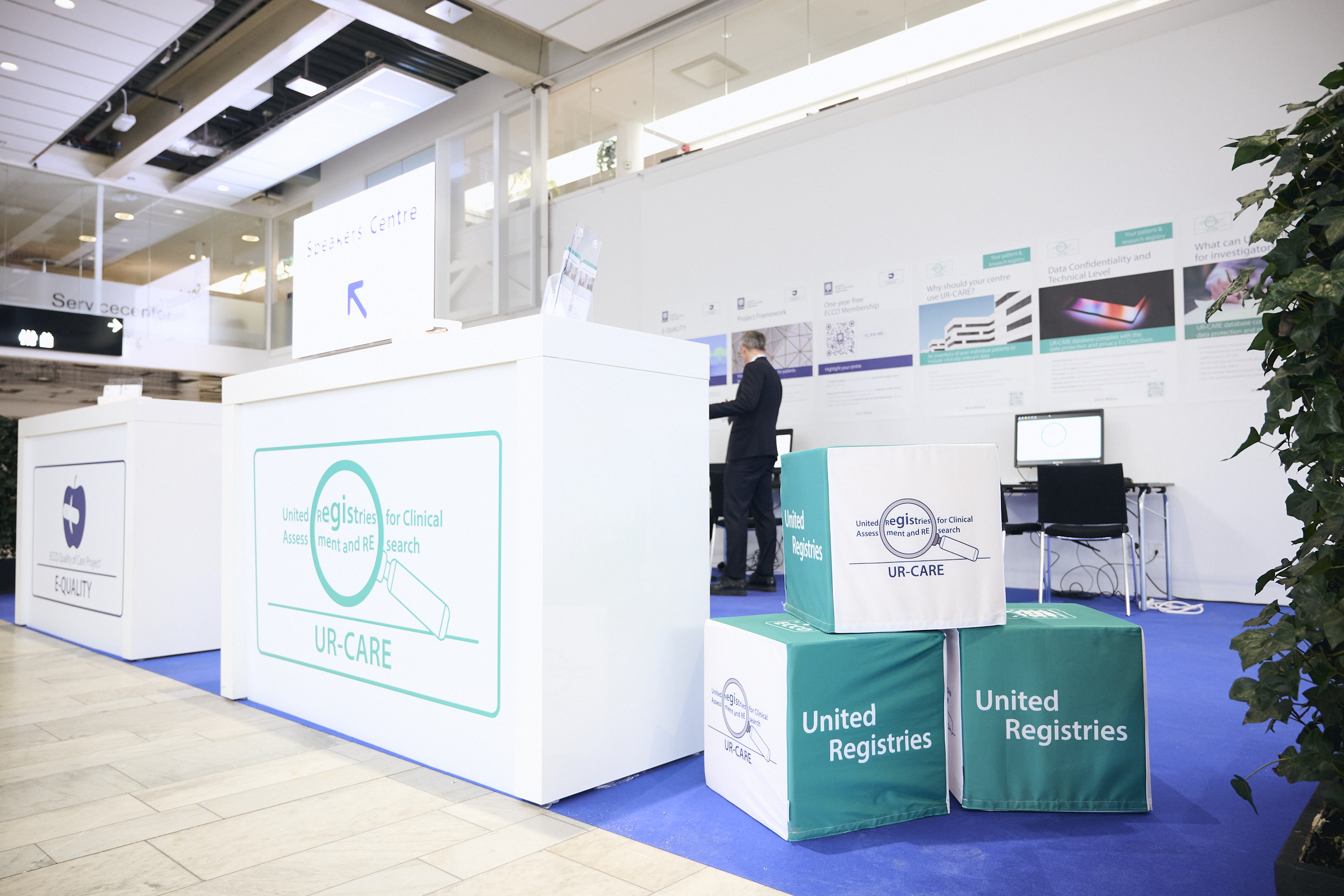
Lastly, please come and visit us at the UR-CARE booth during the 22nd Congress of ECCO, which will be held from March 3 to 6, 2027 in the Bella Center Copenhagen in Denmark: ECCO - European Crohn's and Colitis Organisation
Thank you very much, Filip, for the interesting interview and the insights into UR-CARE.
Pictures are subject to copyright © ECCO